
The Square Kilometre Array Observatory (SKAO) and MeerKAT are among the most ambitious radio astronomy projects ever undertaken, with large-scale SKAO science operations expected to accelerate only after 2030. Preparing for the scientific opportunities of the next 50+ years therefore requires more than training the next generation of researchers – it calls for strategic investment in the next next generation who will inherit and sustain these facilities far into the future.
The Development and Outreach Office at the Inter-university Institute for Data-Intensive Astronomy (IDIA) has adopted a circular approach that begins by inspiring communities and identifying potential future scientists and innovators. Individuals are then supported with targeted training and opportunities to develop essential skills, particularly in data-intensive fields, before being empowered to inspire and mentor the next cohort, reinforcing a sustainable ecosystem of scientific growth.
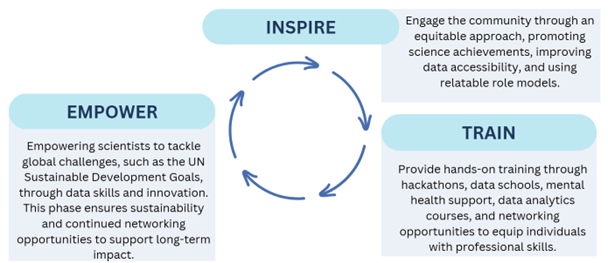
By cultivating this next next generation of researchers, the model aims to ensure long-term impact and create sustainable pathways for scientific advancement and innovation – not only for projects such as the SKAO and MeerKAT+, but also by promoting the application of these skills to drive innovation in industry and address challenges aligned with the United Nations Sustainable Development Goals.
IDIA’s infrastructure is also built on a successful model achieved through the collaborative efforts of a multidisciplinary team. By replicating this model, the Development and Outreach office at IDIA aims to address challenges in development, outreach, and education, ensuring a comprehensive and collaborative approach to innovative problem-solving.